
Kiowa County Criminal Docket Searches
Kansas Case Search is the main online channel for Kiowa County criminal docket information. Set District as the court. Pick Kiowa as the county, and choose Case Number or Party Name as the search type. Then open Additional Search Filters and select Criminal. Adding file-date bounds helps when a common name returns too many hits. Before the query runs, the portal asks you to accept its terms. It also makes you pass a human check.
A complete case number works best. A name search relies on the state's last-name-first format. Supported wildcard characters can widen it. When the portal gives you less than the public record allows, go to the courthouse terminal, call the Clerk of the District Court, stop at the counter, or send a written Kansas Open Records Act request naming the document you want.
- Open Kansas Case Search and accept its terms.
- Select District, Kiowa County, and the right search type.
- Enter the full number or a properly formatted party name.
- Choose Criminal and add file-date limits when useful.
- Complete the human check, then review the newest events.
- Ask the clerk for an official or certified copy when needed.
Kiowa Criminal Search Filters
The form splits the work into place, court, search key, and broad case category. That split matters. One portal serves every Kansas county plus appellate matters. A search left at a broad setting can pull irrelevant names. Set the filters tightly to isolate the local criminal docket.
Court: Choose District for Kiowa County trial cases.
County: Select Kiowa, whose observed portal code is KW.
Search type: Use Case Number or Party Name for most criminal matters.
Case type: Choose Criminal under the additional filters.
File dates: These limit when a case was filed, not when a hearing occurs.
Other options include Business Name, Party As Business Name, and Citation Number. They are valid controls. Still, a hit on any of them does not prove a district criminal case exists.
Criminal Dockets: What They Show
A permitted Kiowa County criminal docket result may include a case header, parties and attorneys, a chronological events index, settings, and a public disposition. Treat it as basic case information. It is not a certified record. The exact columns you see can vary by case and court. Exact columns vary. Read the result as a summary of the court record, not the record itself.
| Case number | A local identifier using the KW prefix; criminal syntax follows KW-YYYY-CR-NNNNNN. |
|---|---|
| Header | Court, county, category, filing date, status, and judicial officer when public. |
| Participants | Party roles and attorneys where the public access level permits them. |
| Events index | Dated filings, actions, hearings, orders, and short descriptions. |
| Disposition | Public outcome text when the result and access rules allow it. |
Costs, bond balances, and payment history may or may not appear as a guest. A missing document link never proves a filing does not exist.
Kiowa Criminal Filing Numbers
The Kansas Judicial Branch's FY2025 criminal filing report covers Kiowa County. It lists 36 felony and 62 misdemeanor filings. It also counts 10 felony and 6 misdemeanor matters pending for the period ending June 30, 2025. These are court statistics. They are not a list of people or a live count of open cases.
Those 98 combined filings count new entries for the period. Disposition totals may sweep in older cases carried into the year, so do not match them one-for-one with the filings.
Criminal Case Stages on the Docket
Every case moves through court events, though the path depends on its orders and outcome. A filing opens the record. An initial appearance or arraignment may come next. From there, motions, notices, and pretrial settings can fill out the events index. The matter may close in several ways. It can end with a plea, a dismissal, a trial, or another lawful disposition. Sentencing, when required, shows up as its own stage or event.
Docket flow: Filing › Arraignment › Pretrial › Plea or Trial › Disposition › Sentencing
Treat this outline as a reading aid. No Kiowa County criminal docket is promised to contain every step. The newest entry plus any current order tell you where the case really stands.
Events Index Versus Investigation File
The criminal docket belongs to the court, not to law enforcement or prosecutors. It is not the sheriff's investigation file or the County Attorney's working file. The Kiowa County Attorney prosecutes felonies, misdemeanors, state traffic matters, juvenile matters, and care-and-treatment cases. That office does not keep the District Court register of actions. The Clerk of the District Court holds the rest. That office maintains the case information and the events index.
Other records follow other rules. Police reports, probable-cause material, evidence, and prosecutor files can be subject to different disclosure limits. Rule 22 bars some document types from internet access. K.S.A. 45-221 restricts certain records. So a public event line is no guarantee. You may not get a public download of the paper behind it.
Kiowa County Criminal Docket Courts
The Kiowa County District Court is the state trial court for local felony and misdemeanor cases. It sits in the 16th Judicial District alongside Clark, Comanche, Ford, Gray, and Meade counties. The District Magistrate Judge division here is part of that same court structure. It is not a separate record office.
Municipal court is a different track entirely. Clerks in Greensburg, Haviland, and Mullinville hold the city ordinance and municipal traffic records. A Greensburg ordinance citation belongs with that municipal court. It does not belong with the statewide District Court criminal filter. State-law offenses, by contrast, go back to the Kiowa County District Court. Check the issuing agency and the citation. That shows which side of the split you are on.
Human Check and Clerk Fallback
That “Human check” on Kansas Case Search is a security step, not a dead end. Finish it first. Only then decide whether a Kiowa County criminal docket truly has no results. Once you are through, run the search again. Double-check the basics: District court, Kiowa County, the right search type, the party spelling, the case number, and the Criminal filter.
Still nothing? Rule 22 requires a public terminal at every district courthouse, so you have a fallback. The Kiowa County District Court sits at 211 E Florida Avenue in Greensburg. It keeps weekday hours of 8 a.m. to 5 p.m. Need help with the terminal, a current case setting, an older file, or copies? Call 620-723-3317. The state KORA form lists mail, fax, and email as delivery options. The court itself posts no email address and no full mail-order routine. Confirm the custodian and any charge before you send a request.
Access Rules for Criminal Dockets
Access to criminal dockets has firm limits. Rule 22 opens public case records and event indices through the portal or the courthouse terminal. It also pulls nonpublic matters from both. Rule 106B treats the events index, or register of actions, as an administrative record. That record sits apart from the full case file.
The Kansas adult expungement statute is the source for the assigned image.
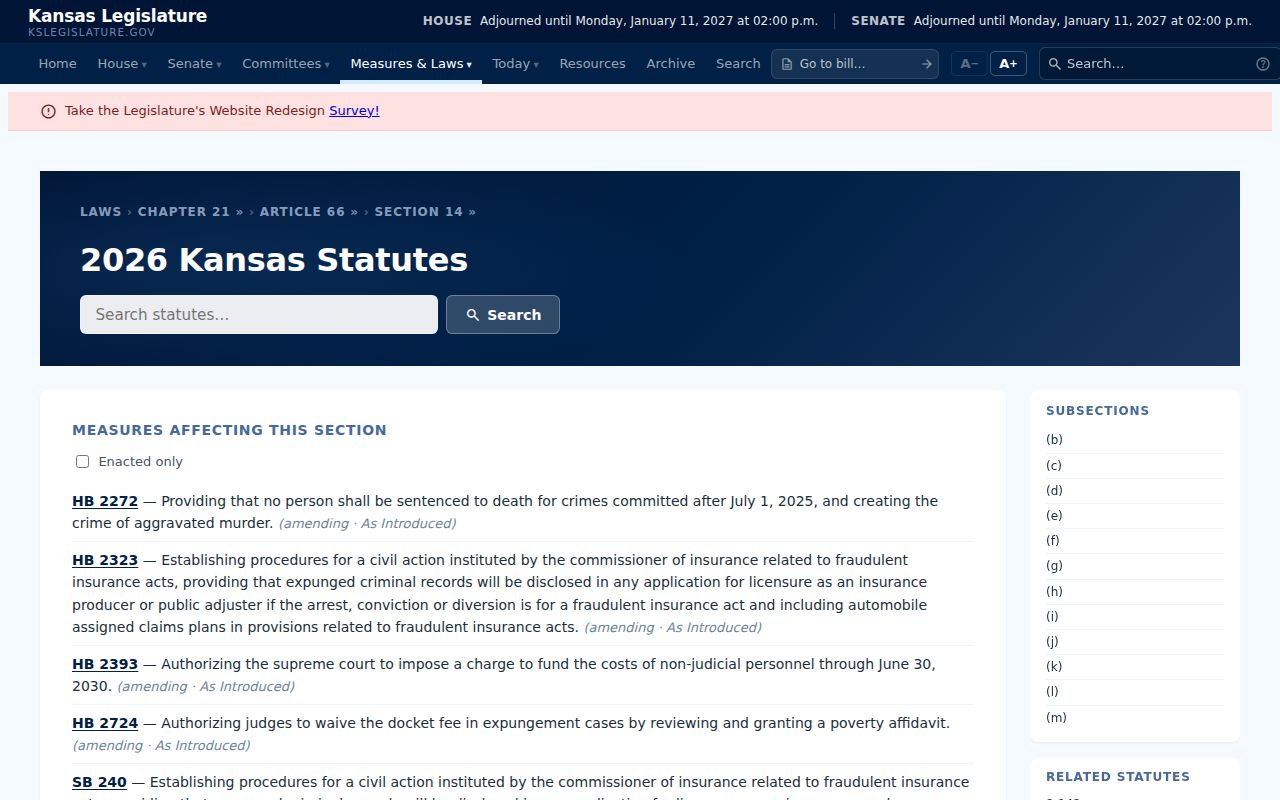
The statute explains why an expunged matter stops appearing as an ordinary public result. The Kansas juvenile-record disclosure law is the source for the next image.
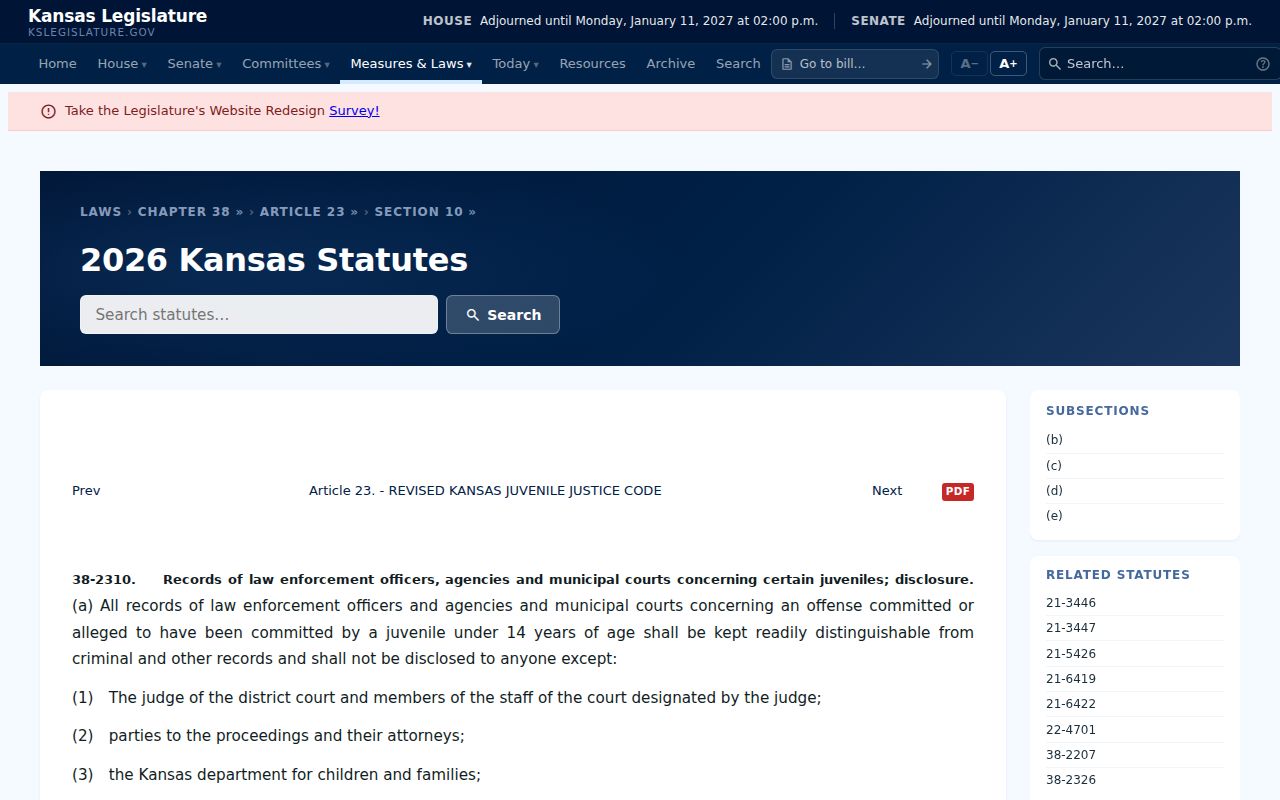
Juvenile limits show why no docket search can serve as a workaround around lawful access rules.
Key access rules: Kansas Supreme Court Rule 22 controls portal and terminal access. K.S.A. 45-218 governs specific public-record requests. Restricted, sealed, juvenile, and expunged material remains subject to law and court order.
Before giving up on the online route, try two formats: the complete case number and the supported party-name form. A shortened number, a missing county prefix, a broad date range, or the wrong court selection can each bury the match you expected. Note the portal's own warning that its display is not the official record. Before calling the clerk, write down the case number and the exact event you need, because those details let the clerk find the court record fast.